
Our Story
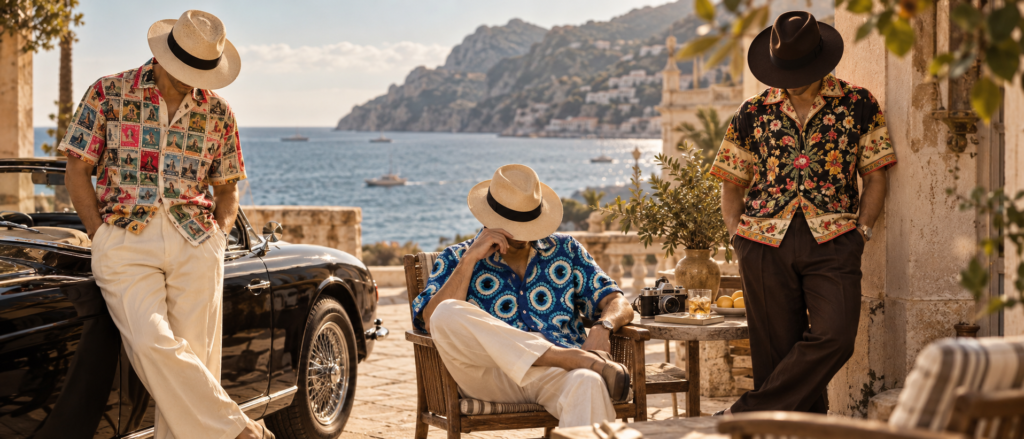
The Mitesh is a menswear label from Delhi, cut from cloth woven, printed and dyed by hand across Kutch and Bhuj. We work in small runs, redraw prints from old archives, and make clothes to be worn often and kept for years.

Where it began
A box of jackets and a tailor two streets away.
It started with hand-me-down jackets and a tailor who could take them apart and put them back better. That habit stayed: take a shape that already works, cut it in cloth woven close to home, and finish it slowly enough to notice mistakes.
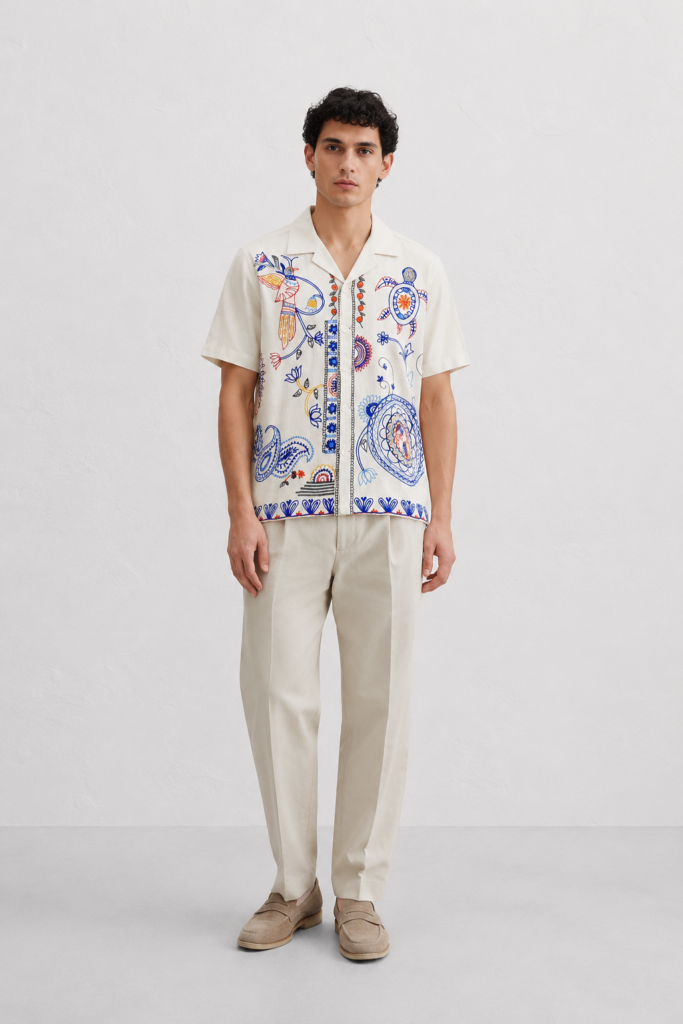
Every piece still begins in the archive — stamp engravings, miniature paintings, the borders of textiles that have outlived their makers. We redraw them by hand, print them on handloom cloth, and cut them into silhouettes made for now.
From the archive
Fragments of visual memory, worn.
Most of our prints begin somewhere old. A vintage map. A sheet of Japanese postage stamps. The graphics on a matchbox, a run of Kashmiri chain stitch, the evil eye painted to keep harm away. We collect these fragments the way other people collect photographs — because they hold a memory that should not end up only in an archive.
Each one is redrawn before it becomes cloth. Lines are traced, simplified, sometimes rebuilt from a corner that survived. Then the drawing is printed, painted, embroidered or pieced together, and wherever a hand did the work, its irregularities are left in. A stamp pressed a shade deeper. A stitch that wanders. That is the part a machine would correct, and the part we keep.
We work slowly, on purpose. Fabrics are chosen for how they age, not how they photograph. Patterns are adjusted by hand, details refined over multiple samples, and every garment is made to be worn often and kept for years.
The aim is not nostalgia, but continuity — carrying fragments of craft and history into everyday wardrobes without losing their character.
The hands behind the cloth
Eleven families across Kutch and Bhuj.

Some weave, some print, one dyes. None of them work only for us — which we think is the healthier arrangement. A workshop that depends on a single label is a workshop that cannot say no.
What they make keeps its human irregularities: a stamp pressed a shade deeper at the seam, a thread that takes the dye differently from the cloth. We leave those in. They are the record of how a piece was made.
How a run happens?
-
01
The cloth
Cloth is agreed twice a year. Stamps are checked for wear, and any that have gone soft are recut.
-
02
The sample
A sample is made and worn by whoever is nearest to the fit. It is accepted or abandoned — never reworked a third time.
-
03
The run
Between eighteen and sixty pieces are made, depending on the garment. That is the whole run. There is no reorder.